The Work
Conditions, Choice, and Natural Intelligence
The way people make decisions is shaped less by effort or intention than by the conditions surrounding them.
When environments are fast, abstract, or saturated with constant input, people often lose touch with one another, their bodies, and natural rhythms. Perception narrows, stress increases, and it becomes harder to recognize available options. This isn’t a personal failing—it’s a common and understandable response to sustained pressure.
Rasa Tree’s work focuses on adjusting those environments so people can think, sense, and decide with greater steadiness. Rather than offering advice or solutions, the work pays attention to pace, space, timing, and relational tone—the often invisible factors that quietly shape how options appear or disappear.
In moments of sustained pressure, even small shifts in conditions can restore a felt sense of choice. When pressure eases, people tend to see more clearly, respond with less reactivity, and make decisions that feel more aligned with their values and responsibilities.
Public Gatherings
Prepared Evenings for Shared Regulation
Public performances are carefully prepared gatherings that combine music, simple nourishment, and quiet structure to create a low-pressure social environment.
These evenings are not designed as entertainment or spectacle. They are designed to support shared settling—allowing attention to slow, perception to widen, and people to reconnect with their own internal timing in the presence of others.
For many attendees, this is a first direct experience of what becomes possible when conditions are intentionally supportive rather than demanding.
Retreats
Time and Space to Restore Clarity
Retreats offer extended time away from high-demand environments to reestablish steadiness, perspective, and self-trust.
Through careful pacing, nourishment, sound, silence, and time in natural settings, participants often notice how much their perception and decision-making have been shaped by chronic pressure and technological saturation.
Retreats are appropriate for individuals navigating transition, burnout, or moments where clearer internal signals are essential.
Individual Work
Support at Choice Points
Individual sessions support people who feel constrained, overwhelmed, or uncertain at important decision points.
By adjusting conditions rather than analyzing problems, these sessions often restore clarity more directly and gently than insight-driven approaches.
The emphasis is on regulation, perception, and rebuilding trust in one’s own capacity to sense what is appropriate.
Subsection: Organizational Work
Conditions for Better Decisions Under Pressure
Organizational work applies the same principles to meetings, leadership teams, and decision-making environments.
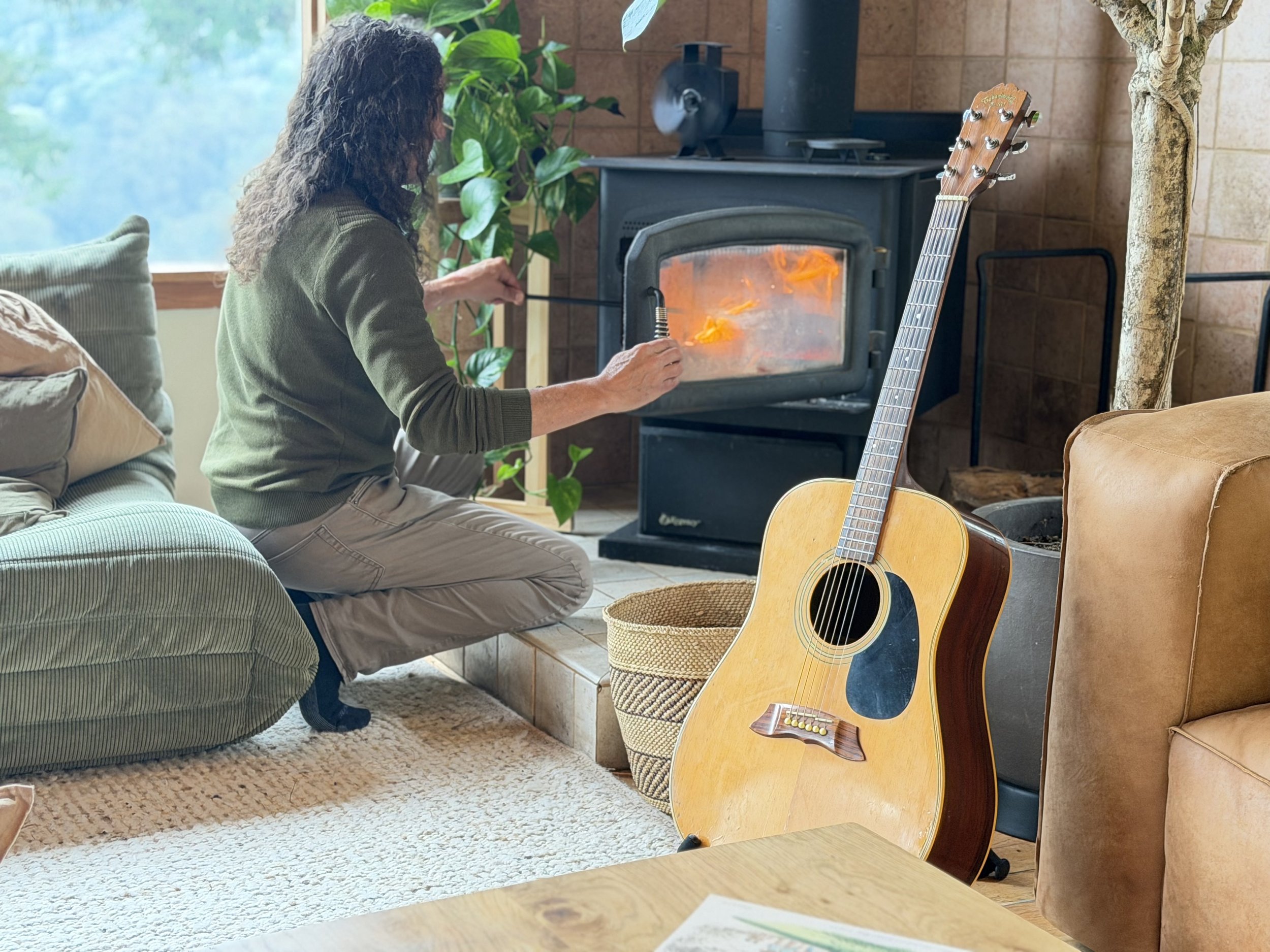
Just as the photographs show careful preparation of space before people arrive—cleaning, arranging, warming, and pacing—Conditions Work focuses on what happens before conversations and decisions take place.
When conditions are prepared with care, meetings become steadier, reactivity decreases, and decisions more closely reflect stated values—particularly in technology-driven contexts where speed and abstraction dominate.